Designing for the Pacific Northwest: Projects from Vancouver to Seattle and Common Practices Learned
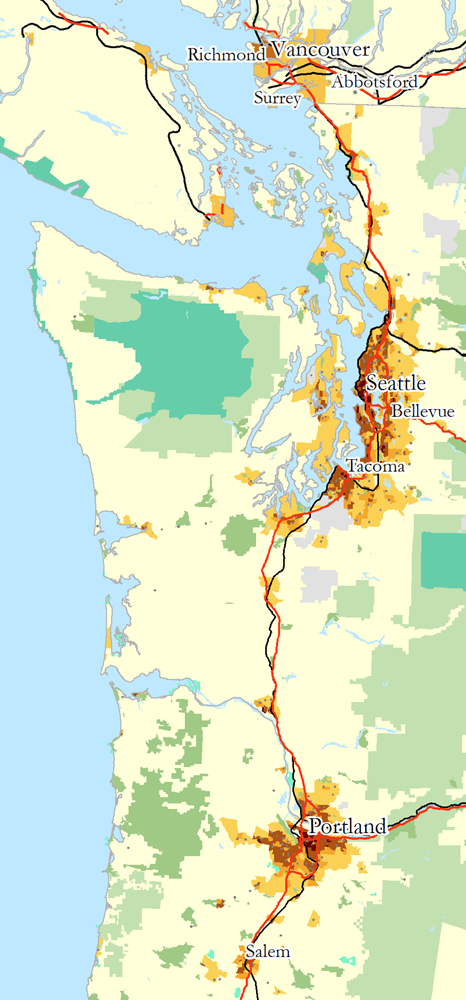
The Pacific Northwest represents a uniquely connected design environment spanning from the Province of British Columbia, the Washington State and the Oregon State. While separated by an international border, the region functions as a closely integrated ecosystem for architecture, landscape architecture, and public realm development.
At Vincent Helton & Associates (‘VHA’), we have spent over two decades delivering water feature systems across this corridor. Through projects in Vancouver and Seattle, a clear understanding has emerged of how design, construction, and operations converge in this region. Rather than isolated experiences, we see consistent patterns shaped by shared climate conditions, regulatory philosophies, and a highly interconnected professional community.
A Shared Pacific Northwest Design Context
Vancouver and Seattle operate under nearly identical environmental conditions, which directly influence how water features are designed and maintained. Both cities experience high annual rainfall, long wet seasons, and generally mild winters with intermittent freeze-thaw cycles. While heavy snow is not typically a dominant factor in urban cores, moisture exposure is constant.
This creates a consistent design framework where water features must prioritize drainage reliability, filtration performance, freeze protection, and long-term material durability. Organic buildup, algae control, and continuous moisture exposure are ongoing considerations that shape both mechanical and architectural decisions.
The shared Pacific Time Zone also supports efficient project delivery. Coordination between consultants, contractors, and developers happens in real time without time-zone delays, improving responsiveness during both design and construction phases.
There is also strong alignment in regulatory and planning philosophies. Vancouver and Seattle both emphasize sustainability, public realm activation, and lifecycle performance. As a result, water features are expected to function not only as visual elements but as efficient, low-energy systems integrated into broader environmental goals.
Selected Project Experience Across the Pacific Northwest
Over the past two decades, VHA has contributed to a range of civic, institutional, commercial, and public realm projects across the region. These projects demonstrate how shared conditions translate into real-world delivery.
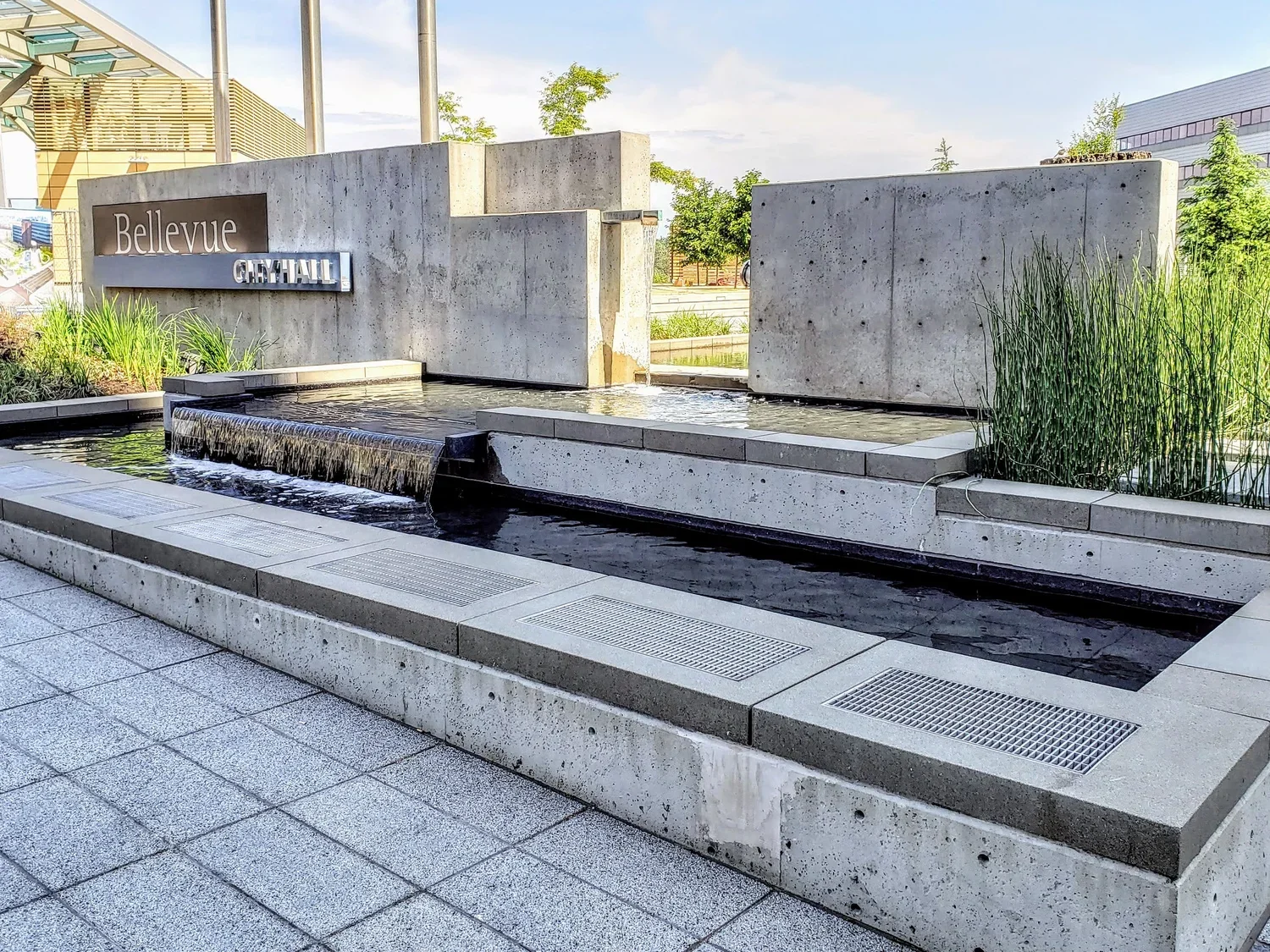
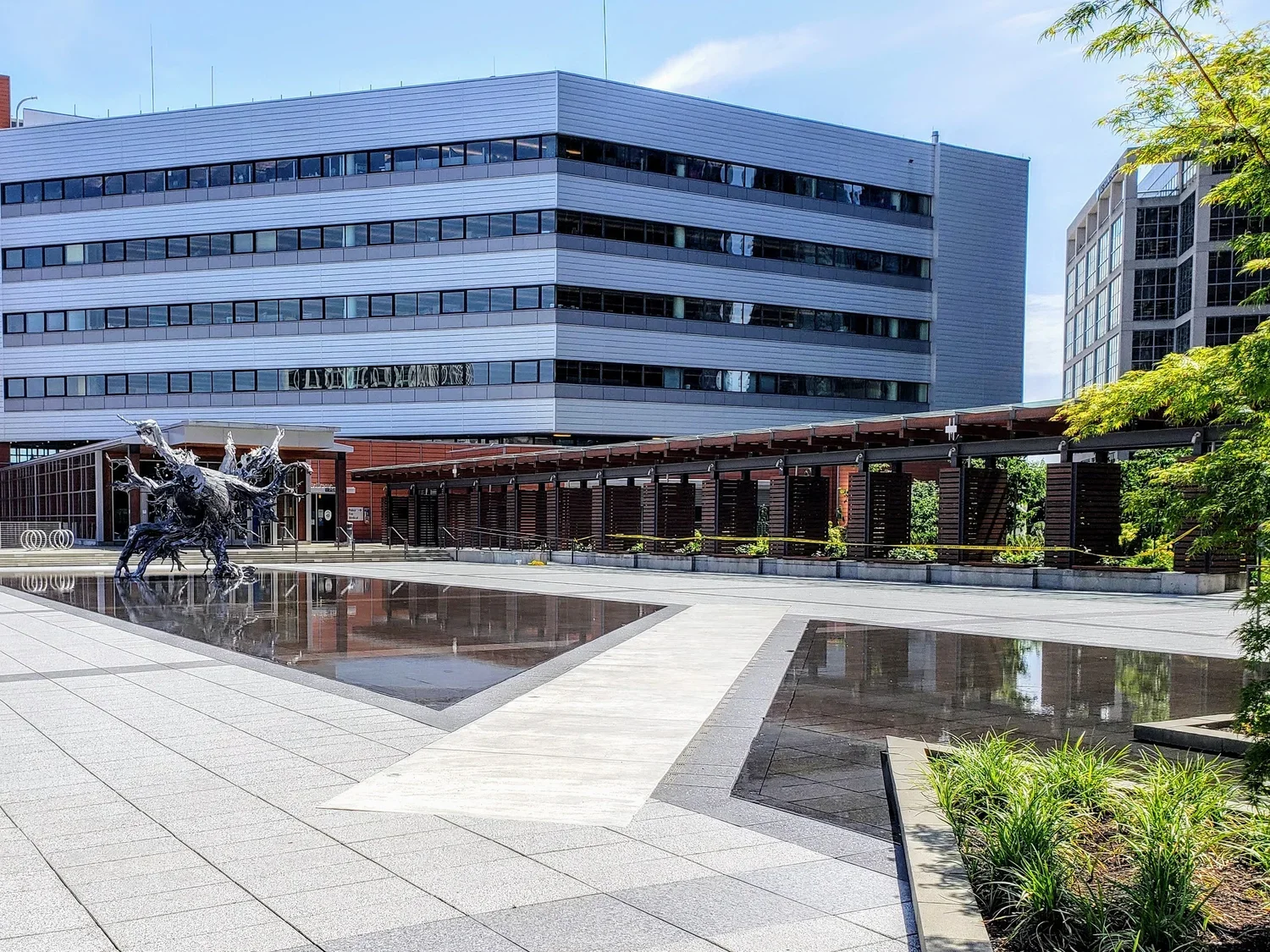
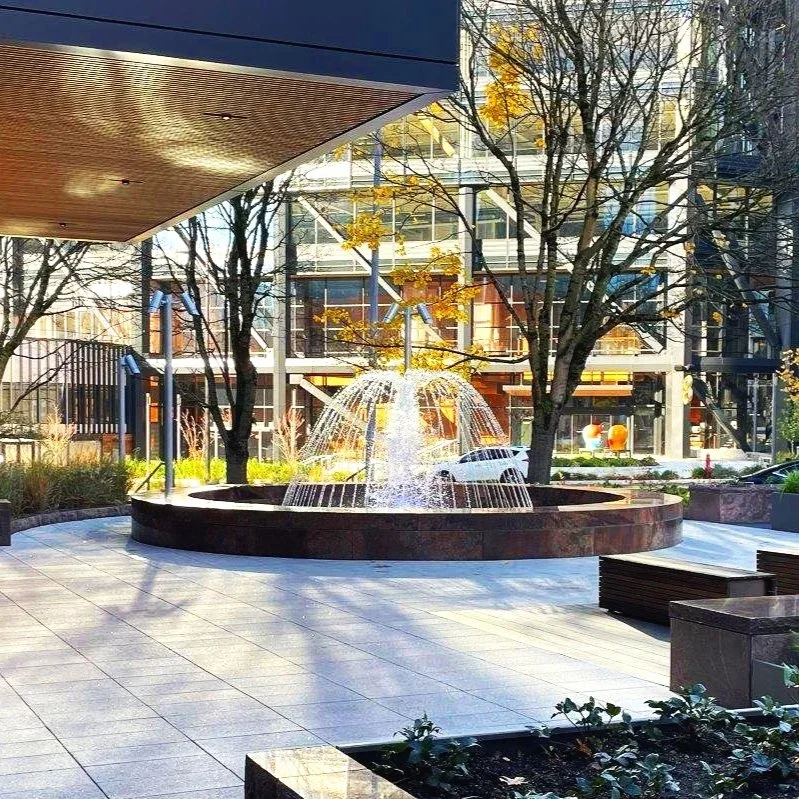
At Bellevue City Hall, the water feature was designed for a highly public civic environment where durability and reliability were essential. The system required continuous operation under heavy public use while maintaining simple and efficient maintenance access for municipal teams. (See details)
At the Museum of Glass in Tacoma, water was integrated with architecture and public art. The design required careful coordination between artistic intent and technical performance, ensuring water movement supported the overall spatial experience without compromising system stability. (See details)
The Bellingham Fountain Plaza reflects a community-focused approach where seasonal variability and public interaction were central. The system needed to accommodate winter shutdowns, freeze protection strategies, and high seasonal use while remaining accessible and engaging. (See details)
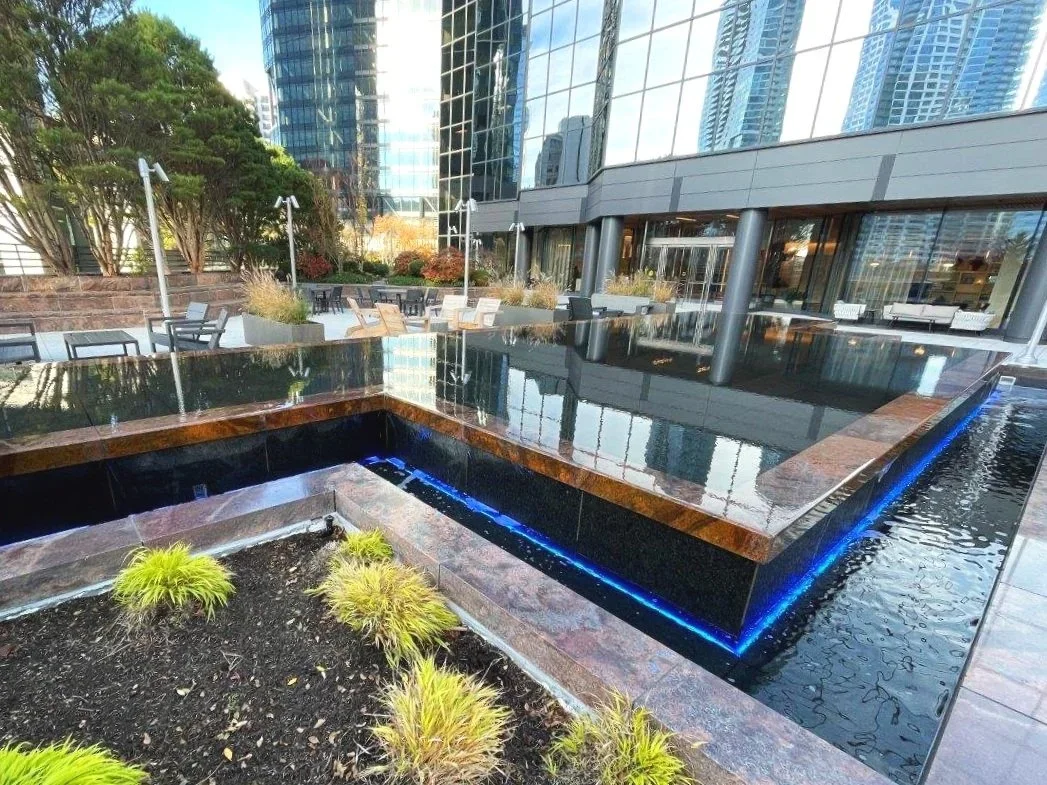
At Symetra Center in Bellevue, the water feature contributes to a dense commercial environment where it enhances tenant experience and supports placemaking. In this context, water becomes part of the broader urban value strategy of the development. (See details)
Sunset Neighbourhood Park in Renton highlights neighbourhood-scale design, where safety, accessibility, and ease of maintenance drive decisions. Systems must be durable for frequent public use while remaining straightforward for municipal operations teams.
At Valley Medical Center in Renton, the focus shifts to healthcare environments. Here, water features are designed for a calm sensory experience, operational reliability, and minimal disruption, supporting therapeutic and healing spaces.
Common Practices Shared Across Vancouver and Seattle Projects
Across these projects, several consistent practices define successful water feature delivery in the Pacific Northwest.
Simplicity in system design is essential. In a climate defined by constant moisture and seasonal change, overly complex systems introduce unnecessary risk. Designs that prioritize clarity, accessibility, and mechanical reliability consistently perform better in long term.
Maintenance must also be treated as a core design input rather than an afterthought. Successful projects are those where operational strategy is considered early, ensuring long-term performance aligns with realistic maintenance capacity.
There is also a clear convergence in how public realm value is defined across both cities. Water features are increasingly expected to function as integrated components of civic and private developments, contributing to identity, placemaking, and user experience.
Finally, the shared professional network across the region reinforces a consistent design language. Despite the international border, collaboration between teams has created a unified approach to water feature design and delivery.
Looking forward to more Collaboration
As development continues across the Pacific Northwest, demand for resilient, sustainable, and experience-driven water feature systems remains strong. While market conditions may vary locally, the underlying regional fundamentals are consistent.
For VHA, our experience across Vancouver and Seattle reinforces a simple conclusion: successful water feature design in this region is defined less by geography and more by shared environmental conditions, professional standards, and long-established practices that span both sides of the border.