
The New Wave of Climate-Resilient Water feature: The Rise of the Urban Fogging System
As global temperatures continue to rise, cities face a complex challenge: how to mitigate the "urban heat island" effect while designing spaces that are beautiful, functional, and easy to maintain.
While traditional water features like pools and fountains remain popular, a highly sophisticated technology has emerged as the ultimate multitool for modern landscape architecture: the fogging system.
Rather than just throwing water in the air, high-pressure fogging introduces a dynamic, atmospheric element to public spaces. It cools the microclimate, acts as a canvas for public art, and blends seamlessly into any architectural layout—making it one of the most versatile water design choices available today.
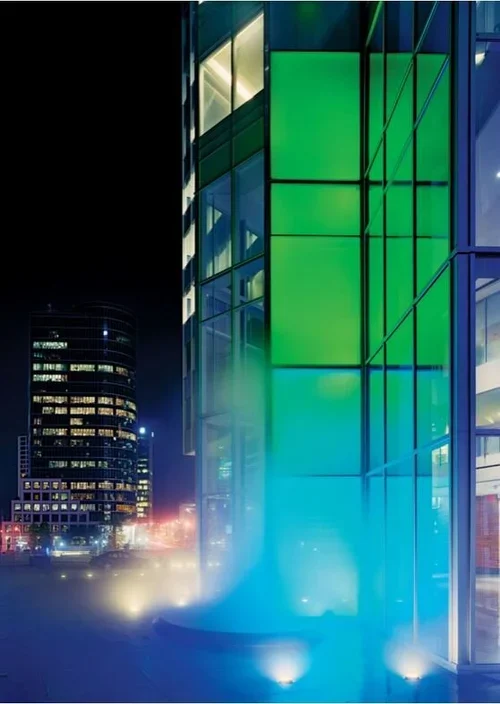
the Shaw Tower at Vancouver
1. The Growing Popularity of Fogging Systems
Across North America, urban planners are moving away from water features that are purely decorative or structurally restrictive. Instead, they are turning to high-pressure fogging systems to meet both environmental and aesthetic goals.
Unlike low-pressure misters that leave surfaces wet and slippery, high-pressure systems operate on the principle of flash evaporation. By pressurizing water and atomizing it into microscopic droplets, the moisture evaporates almost instantly upon contact with the air. This process absorbs ambient heat, dropping localized temperatures by up to 15°C (30°F) without soaking passersby or creating puddles.
Because of this unique property, the applications for high-pressure fog stretch far beyond standard recreational areas. Today, you will find the fogging systems integrated in a wide variety of public spaces from playgrounds, plazas, to shopping malls and pubic parks.
2. Behind the Mist: Key Engineering Components
Creating a reliable, architectural-grade fog blanket requires highly precise hydraulic engineering. Because the system relies on perfect atomization, every mechanical component must work in harmony:
High-Pressure Pump Modules: Operating at 1,000 to 1,500 PSI, these specialized pumps force water through the lines to ensure the droplets are small enough to evaporate before hitting the ground.
Anti-Drip Ruby-Orb Nozzles: Precision-cut nozzles, often utilizing ruby orifices, prevent dripping. Built-in check valves ensure that when the system cycles off, the mist stops instantly without leaving wet spots on the pavement.
Advanced Multi-Stage Filtration: Because the nozzle orifices are microscopic, keeping the water free of sediment and minerals is critical to preventing blockages and scale buildup.
Smart Environmental Sensors: Integrated weather stations monitor real-time wind speed, temperature, and humidity, adjusting the output of the fog so it performs optimally without drifting away on windy days.
3. The Advantages of the Fogging System
For developers and municipal planners, incorporating a high-pressure fogging system offers unparalleled design freedom and operational simplicity.
A. Seamless, Flush-on-Ground Design
Traditional water features require heavy, dedicated footprints, deep basins, or safety barriers. High-pressure fog nozzles can be installed flush within the paver joints of a public plaza or nested discretely inside planting beds. When the system is turned off, the space remains completely unobstructed, allowing a single plaza to host farmers' markets, public events, or daily pedestrian traffic.
B. Simple Health Authority Approvals
Navigating public health regulations for traditional interactive water features can stall projects for months. Standing or recirculating water brings strict mandates for chemical treatment, regular laboratory testing, and risk management for waterborne bacteria (such as Legionella). Fogging bypassed this entire bureaucratic bottleneck. Because the mist is fine, single-pass water that evaporates immediately, there is no standing water, virtually no health risk, and an incredibly straightforward, rapid approval process.
C. Low Water Use & Minimal Maintenance
Compared to traditional water parks or large fountains that cycle thousands of gallons of water per hour, high-pressure fogging uses a fraction of the volume. Because it is a non-recirculating system, there is no need for large underground surge tanks, complex chlorination systems, or daily chemical balancing. Maintenance teams can easily manage the system with basic winterization and periodic filter changes.
D. Immersive Evening Visuals & Versatility
When the sun goes down, fogging systems transform from utility-focused cooling systems into dramatic visual attractions. By integrating programmable, color-changing LED lighting directly into the fog nozzles, the mist becomes a glowing, kinetic sculpture. Municipalities can easily change the lighting schemes to celebrate holidays, match city-wide festivals, or create a cozy, ambient evening atmosphere that keeps public spaces active after dark.
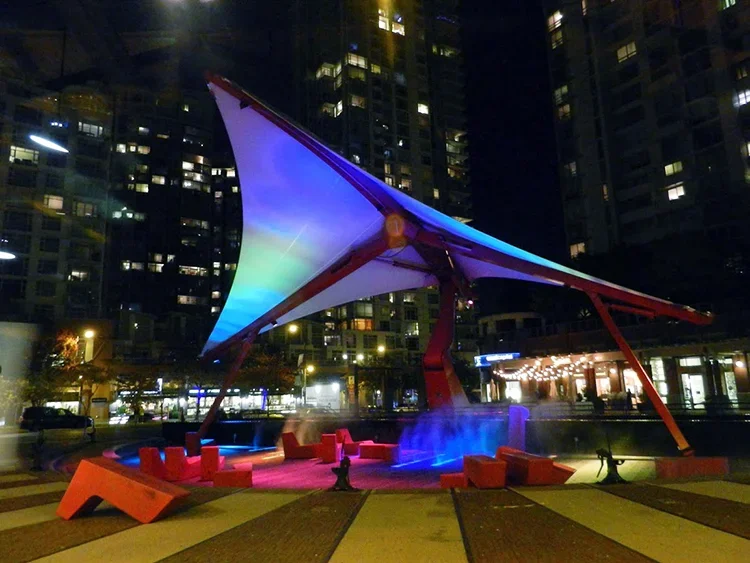
Yaletown Roundhouse at Vancouver
4. Vincent Helton’s Edge
At Vincent Helton & Associates, we have been bridging the gap between mechanical engineering and beautiful public architecture for more than 40 years. We design custom hydraulic systems that are built to last, including these iconic Vancouver landmarks that feature atmospheric mist and water design:
The Vancouver Roundhouse Plaza: Nestled in Yaletown, this historic civic space features integrated water and mist design that honours the site’s heritage as a rail yard. It provides an engaging, atmospheric environment that cools visitors during hot summer days.
The Shaw Tower: Positioned along the Coal Harbour waterfront, this project masterfully blends structural architectural lines with delicate fog and water elements, mirroring the natural marine environment of the Pacific Northwest.
Whether you want to breathe life into a commercial plaza, design an interactive public art piece, or build a resilient cooling zone, our team can help you design a system tailored to your space.
Contact Vincent Helton & Associates today to learn more about incorporating a fogging system into your next project!